Smart Home & Security 4 models
Ring Hub Base Station Breakdown: Reliability, Failover, and Hardware Setup
As Amazon Associates, we earn from qualifying purchases. This means we may receive a small commission at no extra cost to you if you click through and make a purchase.
A reliable home security framework relies entirely on the stability, processing capacity, and network continuity of its central controller. When selecting a ring hub base station, homeowners are fundamentally choosing how their security sensors communicate during crisis events, how emergency alerts escape during power grid blackouts, and how local data routes through residential network hardware. Ring approaches this central hub architecture through two divergent philosophies: a dedicated, lean security controller engineered exclusively for alarm processing, and an integrated hybrid unit that combines alarm coordination with a complete residential Wi-Fi 6 router. Evaluating a ring alarm base station comparison requires assessing failover mechanics, local siren output, power survivability, and physical hardware constraints.
This comprehensive hardware breakdown analyzes 4 Ring ecosystem products that define the central security hub deployment. We examine the core processing engines—the standard second-generation base hub and the router-integrated Pro hub—alongside essential physical hardware accessories designed to maintain peripheral battery power and ensure secure console placement. Deciding which ring alarm base station to buy hinges on whether your residence benefits from an all-in-one mesh network controller or demands an isolated security bridge that functions independently of your primary internet service router.
Which Ring Alarm Base Stations Should You Buy
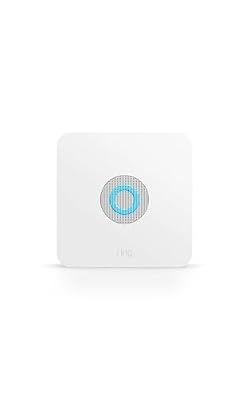
Ring Alarm Base Station
8.8/10 Our score
- Color
- White
- Size
- 6.65 in X 6.65 in X 1.46 in
- Dimensions
- 6.65 x 6.65 x 1.46 inches
Best for: Standard homes seeking dedicated alarm reliability
Pros
- Built-in 24-hour backup battery
- Loud 104 dB internal siren
- Smash-proof signal protection
Cons
- Requires subscription for cellular backup
- Sensors sold separately
- Traditional households requiring dedicated siren decibels and standalone power resilience: Ring Alarm Base Station
- Connected properties seeking unified network routing, threat filtering, and local device processing: Ring Alarm Pro Base Station
- High-traffic properties maintaining multiple outdoor video peripherals and battery cameras: Ring Charging Station for Quick Release
- Modern interiors requiring upright tabletop stability without drilling drywall holes: Ring Base Station Pro Holder- Secure
Ring Alarm Base Station
Ring Alarm Base Station
8.8/10 Our score
- Color
- White
- Size
- 6.65 in X 6.65 in X 1.46 in
- Dimensions
- 6.65 x 6.65 x 1.46 inches
The Ring Alarm Base Station serves as the foundational hardware core for residential security, built to isolate alarm logic from general household computing tasks. Designed as the ring alarm base station 2nd gen unit, this controller connects Ring contact sensors, motion detectors, and specialty hardware like a ring glass break sensor 4 pack to keep perimeter defenses synchronized. Because the unit focuses strictly on alarm relay tasks, its processing architecture remains unencumbered by residential streaming, smart television traffic, or local file transfers. Everything required for base setup ships directly in the packaging, allowing straightforward connection to local power and guided pairing through the Ring application.
Reliability during physical intrusion and utility disruptions forms the principal strength of this classic controller. The listing highlights built-in smash-proof engineering, ensuring that if an intruder strikes or destroys the hub during an active entry delay countdown, the hardware still successfully transmits the alarm signal to notification servers or emergency responders. Furthermore, the internal ring alarm hub battery backup maintains continuous monitoring operations for up to 24 hours during total mains power collapse. A piercing 104 dB siren is integrated directly into the chassis, guaranteeing an immediate, high-volume acoustic deterrent that sounds instantly when perimeter sensors trigger, even if household broadband connections are severed.
For buyers evaluating ring alarm base station offline reliability, this model represents zero-fuss isolation. It does not attempt to manage your smart home mesh network, which means network firmware updates or third-party Wi-Fi crashes cannot bring down your alarm framework. Arming and disarming via voice control through Alexa, cellular signal fallback during internet outages, and 24/7 professional dispatch for police, medical, or fire emergencies are available when paired with a compatible Ring Protect subscription plan. For users who already operate a high-grade commercial router or who prefer keeping physical alarm functions separate from household internet equipment, this dedicated hub remains the most focused security choice.
- Integrated 104 dB siren delivers an immediate audible deterrent during sensor triggers
- Internal rechargeable backup battery maintains operations for up to 24 hours without power
- Smash-proof signal retention ensures alarm transmission even if physically damaged during entry delay
- Direct app onboarding with full support for emergency monitoring through compatible Ring Protect plans
Ring Alarm Pro Base Station

Ring Alarm Pro Base Station
9.0/10 Our score
- Color
- WHITE
- Dimensions
- 6.65 x 6.65 x 2.57 Inches
- Weight
- 1.87 pounds
Best for: Homes combining mesh Wi-Fi with security
Pros
- Built-in eero Wi-Fi 6 router
- Speeds up to 900 Mbps
- Wide environmental sensor support
Cons
- Requires dual app management
- No wall mounting bracket included
The Ring Alarm Pro Base Station radically transforms the standard security hub by embedding a high-performance eero Wi-Fi 6 router directly into the central security enclosure. This hybrid architecture positions the base station as both the coordinator for security peripherals and the primary internet gateway for your home. By supporting network speeds up to 900 Mbps and covering up to 1,500 square feet, the Pro model streamlines hardware clutter by eliminating the need for a separate broadband router. Network onboarding is handled across both the Ring and eero applications, giving homeowners access to optional online threat protection and unified management of smart accessories, security cameras, and mobile hardware.
When conducting a ring alarm base station vs pro analysis, the primary trade-off emerges between network unification and hardware dependency. The Pro hub centralizes connection management for extensive accessory lines, linking flood and freeze sensors, smoke and carbon monoxide listeners, glass break detectors, smart lighting, and video doorbells. Deployments that run intensive security cameras or battery devices, similar to how standalone setups manage a roku outdoor camera battery powered wireless ecosystem, benefit from the Pro model’s consolidated bandwidth allocation. However, placing routing duties inside the security chassis means any technical reset of the primary internet gateway temporarily impacts the local base station hardware environment.
Physical power failover and network survivability on the ring alarm pro base station introduce modern flexibility alongside specific operational requirements. When subscribing to compatible Ring Protect or Ring Home tiers, the system maintains 24/7 professional monitoring access, Alexa voice arming capabilities, and cellular internet backup that keeps connected security devices online when municipal internet lines drop. The listing confirms that all essential installation equipment is supplied in the box. Homeowners seeking a sophisticated smart home core that minimizes separate desktop appliances will find the Pro hub a potent, consolidated network engine.
- Integrated eero Wi-Fi 6 router delivers up to 900 Mbps speeds and 1,500 square feet of coverage
- Unified system controller pairs with Ring doorbells, environmental sensors, cameras, and smart lighting
- Cellular fallback and threat protection supported through applicable subscription plans
- Streamlined installation utilizing combined setup workflows across the Ring and eero mobile apps
Ring Charging Station for Quick Release

Ring Charging Station for Quick Release
9.0/10 Our score
- Size
- 1
- Dimensions
- 2.2 x 1.06 x 3.15 inches
- Weight
- 0.48 pounds
Best for: Homes managing multiple Ring camera batteries
Pros
- Charges two packs simultaneously
- Nearly twice as fast charging
- Generous 6ft power cord
Cons
- Batteries sold separately
- Indoor temperature range only
Central security hubs depend heavily on the continuous operation of peripheral surveillance cameras and external sensors. The Ring Charging Station for Quick Release provides essential hardware support by functioning as a dedicated dual-bay replenishment dock for Ring quick release battery packs. Rather than tethering individual cameras to loose wall chargers or waiting hours for sequential single-cord replenishment, this compact desktop accessory powers two batteries simultaneously. Placed in an office, utility room, or security cabinet, it ensures fully charged battery reserves are immediately ready to swap into perimeter cameras the moment low-battery alerts appear.
Engineering specifications detailed in the listing underscore significant charging efficiency over standard methods. The charging dock plugs directly into standard 100-240V, 50/60Hz AC electrical wall outlets and delivers variable multi-stage power output rated at 5V 3A (15W), 9V 2A (18W), and 12V 1.5A (18W). This intelligent delivery charges both battery packs nearly twice as fast as using a conventional Micro USB cord alone. Clear visual indicator lights positioned on the dock body inform users precisely when cells reach full capacity, eliminating guesswork before batteries are mounted back into outdoor security housings.
Physical dimensions emphasize a small footprint: the charging dock measures 2.36 by 2.32 by 2.40 inches, while its bundled wall power adapter measures 2.20 by 1.06 by 3.15 inches, connected via a generous 6-foot power cord. The unit is rated for stable indoor operation between 50°F and 104°F. While prolonged outdoor camera deployments often demand portable backup field banks such as an omnicharge power bank during deep off-grid trips, this dedicated dual dock provides the steady, daily turnaround necessary to prevent camera downtime across your residential Ring perimeter.
- Dual-bay dock recharges one or two Ring quick release battery packs at the same time
- Charges battery packs nearly twice as fast compared to standard Micro USB wall cables
- Multi-stage power output scaling up to 18W ensures efficient, safe battery replenishment
- Compact desktop profile equipped with an extended 6-foot power cable for flexible placement
Ring Base Station Pro Holder- Secure

Ring Base Station Pro Holder- Secure
9.4/10 Our scoreTop scored: 9.4/10 or higher
- Color
- White
- Size
- 7.25" L X 3.25" W X 1.55" H
- Dimensions
- 7.25 x 3.25 x 1.55 inches
Best for: Pro owners needing stable flat placement
Pros
- Snug precision desktop fit
- Zero drilling or wall damage
- Compact tabletop footprint
Cons
- Not compatible with wall mounting
- Pro base station not included
Proper physical installation of security hub equipment is critical for optimal radio frequency transmission, passive cooling, and aesthetic organization. The Ring Base Station Pro Holder- Secure by CleverHomeSolutions is a precision-crafted mounting accessory engineered specifically for the Ring Alarm Pro base unit. Designed to resolve the unique placement challenges of the larger Pro chassis, this specialized stand provides a snug, stabilizing fit that holds the base unit securely upright on horizontal furniture surfaces, protecting the device from accidental knocks, cable drag, or desktop clutter.
A primary consideration highlighted in the listing is placement versatility without structural alterations. Unlike wall-mounted brackets that require drywall anchors, power drills, and permanent fasteners, this ring base station pro holder allows users to position the Pro hub directly on desks, bookshelves, console tables, or media cabinets. The tool-free, wireless DIY setup simply involves sliding the Pro base station into the custom-molded cavity. The clean white finish matches the Ring factory aesthetic, allowing the elevated hub to integrate cleanly into home offices or living rooms while keeping indicator lights clearly visible.
Buyers must take careful note of hardware compatibility and installation limitations. The listing explicitly states this holder is custom-contoured for the Ring Alarm Pro base station model exclusively and is not designed or rated for wall mounting. Measuring 7.25 by 3.25 by 1.55 inches, the stand creates a wide, counterbalanced footprint that prevents the Pro unit from tipping over when heavy Ethernet lines or power cables are attached to its rear ports. For Pro hub owners who rent their homes or simply wish to avoid drilling into drywall, this stand provides practical physical security.
- Custom-molded upright stand tailored specifically for the Ring Alarm Pro base unit
- Sturdy tabletop base eliminates drywall drilling, wall anchors, and mounting brackets
- Maintains easy access to rear cable ports while stabilizing the hub against accidental falls
- Clean white styling seamlessly matches the aesthetic profile of the official security hardware
What Sets These Models Apart
Selecting the appropriate central hub hardware requires evaluating fundamental trade-offs between system architecture, auxiliary power capabilities, network management, and mounting requirements. The standard base station focuses strictly on hardened, autonomous alarm operations, while the Pro model serves as a dual-purpose Wi-Fi 6 router and security coordinator. Complementary accessories further dictate how peripheral camera batteries stay refreshed and how the main hub physically sits within your home. The comparison table below highlights the operational differences across all four units.
| Hardware Model | Primary Function | Power & Battery Architecture | Network Integration Role |
|---|---|---|---|
| Ring Alarm Base Station | Autonomous Security Alarm Hub | Internal backup battery lasting up to 24 hours | Dedicated alarm bridge with built-in 104 dB siren |
| Ring Alarm Pro Base Station | Hybrid Alarm Hub & Wi-Fi 6 Router | AC power with cellular failover via subscription | eero router delivering up to 900 Mbps across 1,500 sq ft |
| Ring Charging Station for Quick Release | Dual Battery Replenishment Dock | 100-240V AC input, multi-tier fast output to 18W | Maintains battery readiness for peripheral cameras |
| Ring Base Station Pro Holder- Secure | Upright Desktop Stabilizer Stand | Passive unpowered physical cradle | Tabletop organization exclusively for Pro base station |
Buying Tips for Ring Alarm Base Stations
When investing in a central alarm controller, the most critical decision is determining whether you want your home security framework coupled to your home internet router. The standard Ring Alarm Base Station offers total structural isolation. If your household experiences frequent local network tinkering, bandwidth-heavy gaming, or router reboots, your security system remains completely unaffected. Its built-in 104 dB siren operates locally, meaning sensor triggers immediately fire the high-decibel alarm even if your internet connection fails. Conversely, the Ring Alarm Pro Base Station is engineered for users who want to consolidate hardware, combining a powerful eero Wi-Fi 6 router with alarm orchestration inside one neat package.
Power outage survivability represents another crucial evaluation point. The standard 2nd Gen Base Station contains an internal lithium backup battery that preserves monitoring operations for up to 24 hours during utility grid blackouts. For users running battery-powered peripheral cameras, keeping auxiliary power packs charged via the dual-bay quick release charging station ensures continuous exterior surveillance coverage during stormy seasons. Make sure to assess your geographic location: if power cuts in your neighborhood are frequent and extended, verify that your backup power hardware aligns with the operational duration you require for both your base hub and peripheral cameras.
Finally, consider physical placement, ventilation, and cable management before finalizing your hub location. A central security hub must be positioned centrally within the home to maintain balanced radio coverage across all door, window, and motion sensors. Because the Ring Alarm Pro runs full router hardware, it requires adequate convective airflow and must not be trapped inside cramped, enclosed entertainment centers. Employing a dedicated desktop holder keeps the Pro base station upright, ensuring ventilation slots remain unobstructed and rear Ethernet cables do not pull the unit off horizontal shelving. Always avoid placing any base station directly beside large metallic ductwork or inside metal cabinets that degrade wireless signals.
FAQ
Will the Ring Alarm Base Station sound its siren if the internet goes down?
Yes. The standard Ring Alarm Base Station processes sensor communication locally through its internal radio components. If an armed door sensor or motion detector triggers while your home broadband connection is completely severed, the built-in 104 dB siren will sound immediately to alert occupants and deter intruders. Remote mobile push notifications and professional monitoring dispatch require an active internet connection or a compatible Ring Protect subscription featuring cellular backup.
What is the primary difference in setup between the standard Base Station and the Pro Base Station?
The standard Ring Alarm Base Station sets up entirely within the Ring mobile application as a dedicated security peripheral plugged into a standard wall outlet. The Ring Alarm Pro Base Station acts as a complete residential router, requiring setup across both the Ring app and the eero app. The Pro onboarding process configures your home Wi-Fi network SSID, security encryption protocols, and internet gateway credentials alongside security sensor pairing.
Can the Ring Base Station Pro Holder be mounted to a drywall wall?
No. The Ring Base Station Pro Holder by CleverHomeSolutions is engineered exclusively as a flat-surface desktop, shelf, or counter stand. The product listing explicitly clarifies that the unit is not designed for wall mounting and includes no mounting screw holes, drywall anchors, or hanging brackets. It provides a stable, weighted upright cradle to keep the Pro hub secure on flat horizontal surfaces.
How does the dual charging station speed up battery replenishment?
The Ring Charging Station for Quick Release plugs directly into standard AC wall power and utilizes an advanced power supply capable of multi-stage output up to 18W (delivering 5V 3A, 9V 2A, or 12V 1.5A). According to the manufacturer specifications, this optimized power delivery charges two Ring quick release battery packs simultaneously nearly twice as fast as standard Micro USB cables plugged into generic 5W phone charging bricks.
Does the standard Ring Alarm Base Station require a monthly subscription to function?
No basic functionality is locked behind a mandatory subscription, but advanced failover capabilities are. Without a subscription, the standard Base Station will still pair with Ring sensors, chime on door openings, sound its internal 104 dB siren during alarms, and send basic push alerts to your smartphone when connected to household internet. Features such as 24/7 automated professional emergency dispatch, cellular network failover, and voice-assisted arming through Alexa require an active, compatible Ring Protect plan.
Prices and specifications on this page are read from the Amazon product listing and can change at any time. Scores are out of 10, based on listed specifications and buyer feedback. Nobody at this site handled or measured these products.


