Electronics 3 models
Jackery Alternator Chargers and Vehicle Power Adapters Evaluated
As Amazon Associates, we earn from qualifying purchases. This means we may receive a small commission at no extra cost to you if you click through and make a purchase.
Replenishing a portable power station while driving offers exceptional utility for overlanders, campers, and field technicians, but vehicle electrical systems require strict load management. Tapping into a vehicle alternator or auxiliary DC outlet introduces electrical variables that can strain standard wiring, blow fuses, or discharge the starter battery if safety controls are absent. Selecting an appropriate jackery dc-dc alternator charger or mobile charging link requires matching power output to vehicle alternator capacity, identifying the precise DC connector standard, and implementing reliable low-voltage cutoffs.
This technical guide evaluates three distinct mobile charging solutions engineered for Jackery equipment: a dedicated high-output 600-watt direct vehicle charger, a reinforced 14AWG auxiliary 12V and 24V extension cable, and a regulated 24V 90W AC-to-DC converter designed for vehicles with onboard inverters. These units differ significantly in their input mechanisms, voltage thresholds, thermal safety features, and port configurations, making each model suitable for specific mobile power station demands.
Which Jackery Alternator Chargers Should You Buy
- For high-capacity power stations requiring maximum replenishment speeds without starter battery drain: Jackery DC-DC Charger.
- For flexible plug-and-play charging across standard vehicle auxiliary sockets over extended distances: Car Charging Cable 12V 24V to.
- For legacy compact Explorer stations operated via vehicle pure sine wave inverters or AC generator taps: 24V 90W Jackery Charger for Explorer.
Jackery DC-DC Charger
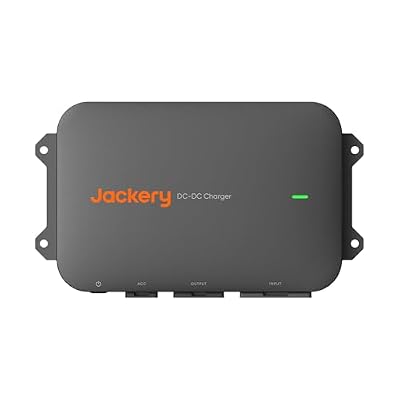
Best for: Overlanders needing rapid high-capacity station replenishment
Pros
- 600W high-speed charging
- Dual ACC ignition monitoring
- Wide 11.8V to 32V input range
- Direct DC8020 port mating
Cons
- Demands substantial vehicle alternator headroom
- Limited to DC8020 compatible stations
The Jackery DC-DC Charger represents a dedicated high-capacity mobile solution capable of delivering up to 600W of continuous power. Operating at speeds up to six times faster than traditional cigarette lighter sockets, this unit dramatically reduces the driving duration required to replenish mid-to-large power stations. It interfaces directly with vehicle charging infrastructure across an input voltage window of 11.8V to 32V direct current, providing native compatibility with 12V passenger vehicles, 24V commercial rigs, fuel-powered trucks, hybrids, and marine craft. By establishing a dedicated high-current charging channel, it eliminates the thermal bottlenecks common to factory auxiliary dash plugs.
Electrical safety forms the core architecture of this jackery dc dc charger battery protection system. It incorporates dual accessory ignition line sensing and active voltage monitoring to track the operating state of your engine. The unit initiates charging when the alternator runs and cuts draw immediately when the vehicle shuts off, preventing inadvertent starter battery depletion. For travelers relying on an auxiliary power bank for remote refrigeration or camp cooking, safe car charging for jackery explorer hardware prevents alternator overload by regulating power distribution. The output terminates in a heavy-duty DC8020 connection, permitting direct attachment to compatible power stations without intermediate plug adapters.
This jackery 600w alternator charger suits overlanders and commercial tradespeople managing high-demand portable power stations who require rapid turnaround between job sites or remote campsites. If you have previously researched a jackery dc to dc charger setup, this dedicated unit delivers the thermal stability and continuous wattage necessary for intensive cycles. However, this high-wattage device gives way to simpler cords if your power station relies on older 8mm barrel ports or if your vehicle lacks the alternator capacity to support a continuous 600W electrical draw.
- Delivers up to 600W charging power, providing replenishment speeds six times faster than standard dash lighter plugs.
- Smart automatic protection with dual ACC ignition detection and voltage monitoring to halt charging when parked.
- Broad operating range supporting 11.8V to 32V input across 12V and 24V vehicular and marine platforms.
- Integrated DC8020 output plug engineered for direct, secure mating with modern high-capacity stations.
Car Charging Cable 12V 24V to

Car Charging Cable 12V 24V to
8.4/10 Our score
- Color
- Orange
- Size
- 15FT
- Weight
- 1.2 Pounds
Best for: Campers requiring long-reach standard auxiliary charging
Pros
- Heavy-duty 14AWG copper conductor
- Generous 15-foot cable length
- Integrated 15A replaceable fuse
- Includes spare fuses and adapters
Cons
- Output capped at 150W to 180W
- Lacks automatic low-voltage engine cutoff
The Car Charging Cable 12V 24V to provides an accessible, non-invasive method for charging portable power stations directly from standard vehicle auxiliary sockets. Built around a heavy-duty 14AWG copper core, this cable is engineered to suppress resistive line loss over its generous 15-foot length, sustaining an operating output between 150W and 180W. Standard factory auxiliary cables often use thinner 18AWG or 20AWG wiring that generates excessive heat under prolonged load, causing voltage drops that slow charging. The thicker copper cross-section in this jackery 12v car charging cable stabilizes current delivery across both 12V and 24V automotive circuits.
Circuit protection is integrated into the male cigarette lighter terminal, which features an accessible, replaceable 15A glass barrel fuse to isolate the vehicle wiring harness from power spikes or over-current conditions. A built-in LED indicator confirms active power flow, allowing quick diagnostics if a vehicle fuse trips or an auxiliary port loses continuity. The outer shell uses a double-layer orange PVC jacket designed to resist abrasion, pinching, and temperature cycles inside vehicle cabins and cargo areas. The package includes two replacement fuses and two DC adapters, ensuring continuous field readiness if an interface adapter is misplaced.
This auxiliary cord suits road trippers, mobile photographers, and outdoor enthusiasts who need to place their power stations in rear cargo beds or camper shells while utilizing a front dashboard 12V socket. It works seamlessly alongside utility accessories like a jackery solar panel extension cable when routing wires through vehicle bulkheads. The cable provides native 8mm barrel compatibility across a vast range of hardware, including Explorer 240, 300, 500, 600 Plus, 700 Plus, 1000 V2, 1500, 2000 V2, 2000 Plus, 3000 Pro, and 5000 Plus. It gives way to dedicated DC-DC chargers when users require charging speeds beyond the standard 180W limit of auxiliary dash sockets.
- Heavy-duty 14AWG copper conductor minimizes voltage drop and supports sustained 150W to 180W charging performance.
- Integrated 15A replaceable overload fuse within the cigarette lighter adapter head for vehicle circuit safety.
- Generous 15-foot orange double-layer PVC jacket permits routing into rear trunks, truck beds, or camper interiors.
- Comprehensive hardware package includes two spare fuses and two DC port adapters for wide field versatility.
24V 90W Jackery Charger for Explorer

24V 90W Jackery Charger for Explorer
9.0/10 Our score
- Color
- Black
- Dimensions
- 4.19 x 1.19 x 7.19 inches
- Weight
- 0.55 Pounds
Best for: Owners of compact Explorer stations with inverters
Pros
- Stable regulated 24V 90W output
- Extreme-temperature TPE jacket
- Automatic shutoff when fully charged
- LED ring power indicator
Cons
- Requires 100V to 240V AC power source
- Incompatible with larger Explorer models
The 24V 90W Jackery Charger for Explorer operates as a dedicated regulated power supply designed to charge specific compact Explorer stations. Unlike direct DC auxiliary lines that pass fluctuating vehicle system voltages straight to the station, this unit connects to an AC power source ranging from 100V to 240V at 50-60Hz and transforms it into a stable 24V direct current output at 3.75A. For vehicles equipped with factory 110V wall outlets, onboard pure sine wave inverters, or auxiliary dual-battery AC generator lines, this adapter delivers clean, switch-mode power that protects sensitive internal battery management circuitry.
Thermal endurance and cable durability are enhanced by a premium thermoplastic elastomer jacket rated to withstand ambient temperatures ranging from -40 degrees Fahrenheit to 221 degrees Fahrenheit. This extreme thermal range prevents stiffening, cracking, and jacket fatigue during winter road trips or high-heat summer vehicle storage. The cable terminates in a 7.9mm by 5.5mm connector fitted with an illuminated LED indicator ring to verify active current delivery. The internal board is FCC, CE, and RoHS certified, featuring multi-point safety protections against over-voltage, operational over-temperature, and output short circuits, automatically cutting current when the station battery hits full capacity.
This adapter is engineered specifically for users running compact field power banks, including the Explorer 160, 240, 300, 500, and 550 models. It provides a reliable power link when operating alongside a portable setup featuring a jackery 500w solar panel array where alternating utility power is available. Users must note strict hardware boundaries: this adapter is not compatible with the Explorer 290, 300D, 300 V2, 880, 1000, 1500, 2000, or 3000 series. It gives way to the DC-DC charger or 12V/24V direct cable when vehicle AC inversion is unavailable or when operating high-capacity stations requiring higher amperage.
- Regulated 24V 3.75A direct current output providing 90W of stable, continuous charging performance.
- Industrial-grade TPE jacket resists tangling and maintains structural flexibility from -40°F up to 221°F.
- Certified multi-protection safety system with automatic power cutoff upon full battery replenishment.
- Dedicated 7.9mm by 5.5mm barrel plug equipped with an integrated LED power indicator ring.
What Sets These Models Apart
A rigorous jackery alternator charger comparison reveals sharp differences in how each unit extracts and processes electrical energy. Direct DC alternator chargers extract power at substantial wattages to feed large battery packs, but they demand adequate alternator reserves and specialized connectors. Standard auxiliary cables rely on existing vehicle 12V or 24V sockets, offering universal physical compatibility at moderate charging speeds governed by standard socket fuses. Regulated AC/DC converters rely on an alternating current feed, bypassing automotive DC fluctuations altogether to deliver clean, isolated power to smaller battery management systems.
| Product Model | Rated Output Power | Input Voltage and Source | Connector Standard | Primary Protection Mechanism |
|---|---|---|---|---|
| Jackery DC-DC Charger | Up to 600W | 11.8V to 32V DC (Vehicle Alternator/Battery) | DC8020 Port Output | Dual ACC ignition detection and voltage monitoring |
| Car Charging Cable 12V 24V to | 150W to 180W | 12V / 24V DC (Auxiliary Cigarette Lighter) | DC 8mm Barrel with 2 Adapters | Integrated 15A replaceable glass fuse |
| 24V 90W Jackery Charger for Explorer | 90W (24V at 3.75A) | 100V to 240V AC (Inverter / Grid Source) | 7.9mm by 5.5mm Barrel | Over-voltage, short-circuit, and thermal shutoff |
The operational divide between these units centers on thermal management and input delivery. Operating a 600W direct charging system demands that the vehicle alternator possess sufficient surplus output beyond base chassis electronics. The 14AWG auxiliary cable addresses the physical distance between power outlets and cargo storage, using thicker copper to prevent overheating common in generic thin cords. Meanwhile, the 90W regulated supply isolates the battery pack from vehicle electrical noise, trading raw charging speed for clean voltage stability on compact Explorer units.
Buying Tips for Jackery Alternator Chargers
Before purchasing any vehicle charging solution, evaluate the rated output of your vehicle alternator and the continuous capacity of your electrical circuit. Standard passenger car alternators typically produce between 90A and 140A, with significant portions reserved for engine management, lighting, climate systems, and onboard computers. Drawing 600W on a 12V architecture pulls approximately 45A to 50A of continuous direct current. Ensure your vehicle alternator can sustain this additional load during hot weather and low-RPM idling to prevent thermal damage to the alternator stator and diodes.
Port compatibility requires careful verification because Jackery utilizes multiple barrel dimensions across its generations. Modern high-capacity power stations rely on the robust jackery dc8020 vehicle charger standard, which features an 8.0mm outer diameter with a thick 2.0mm center pin designed to handle higher current without excessive thermal buildup. Older or smaller Explorer units rely on 8mm (often designated as 7.9mm by 5.5mm) connectors with central internal pins. Forcing an incompatible barrel diameter into a port can bend internal contact leaves, create high-resistance electrical connections, and cause port melting under continuous loads.
Review the physical routing environment and thermal constraints of your vehicle cabin. Running high-current cords beneath carpet, across sharp seat sliding rails, or coiling excess length creates localized heat buildup and introduces physical pinch hazards. Always opt for heavy-gauge conductors like 14AWG for extended cable runs, verify that in-line fuses match manufacturer ratings, and confirm that your mobile setup features automated shutoff mechanisms so your starter battery maintains sufficient cranking voltage in remote backcountry locations.
FAQ
What is the difference between a direct DC-DC charger and a standard car charging cable?
A direct DC-DC charger actively manages and elevates electrical current directly from the vehicle alternator or primary battery system, delivering high wattage such as 600W through specialized connections. A standard car charging cable connects to an auxiliary cigarette lighter socket, which is naturally limited by the vehicle internal wiring harness and socket fuse to roughly 120W to 180W.
Will using a vehicle charger drain my starter battery when the engine is turned off?
Passive car charging cables plugged into constantly live 12V auxiliary sockets will continue to pull power until the vehicle battery is depleted. Advanced units like the Jackery DC-DC Charger mitigate this risk by integrating dual ACC ignition sensing and real-time voltage monitoring, which detects when the alternator ceases rotation and instantly terminates the charging draw.
Can I use the Jackery DC-DC Charger on 24V electrical architectures?
Yes, the charger supports an input voltage range from 11.8V up to 32V direct current. This wide operating range provides native electrical compatibility with both standard 12V passenger cars and 24V electrical architectures found in heavy-duty commercial trucks, expedition vehicles, and marine vessels.
Why is barrel connector diameter so critical when selecting a Jackery vehicle charger?
Jackery power stations employ distinct connector profiles depending on battery capacity and hardware generation. High-wattage power stations use the DC8020 standard with a 2.0mm center pin to handle high-current flow safely, whereas legacy and compact Explorer models use 7.9mm by 5.5mm or standard 8mm ports. Mismatched connectors will fail to establish electrical contact or cause severe resistive overheating.
What does a 15A fuse protect when charging via a vehicle auxiliary socket?
The 15A fuse integrated into the auxiliary lighter plug acts as a sacrificial safety link. If an electrical short circuit occurs or if the connected power station attempts to draw more amperage than the thin vehicle chassis wires can safely dissipate, the fuse filament melts, instantly opening the circuit to prevent wire melting and cabin electrical fires.
Prices and specifications on this page are read from the Amazon product listing and can change at any time. Scores are out of 10, based on listed specifications and buyer feedback. Nobody at this site handled or measured these products.


